Family and clans
How to find your family tartan
A surname does not automatically mean a clan, and a clan does not automatically mean one tartan. A method for checking each link and judging how strong it is.
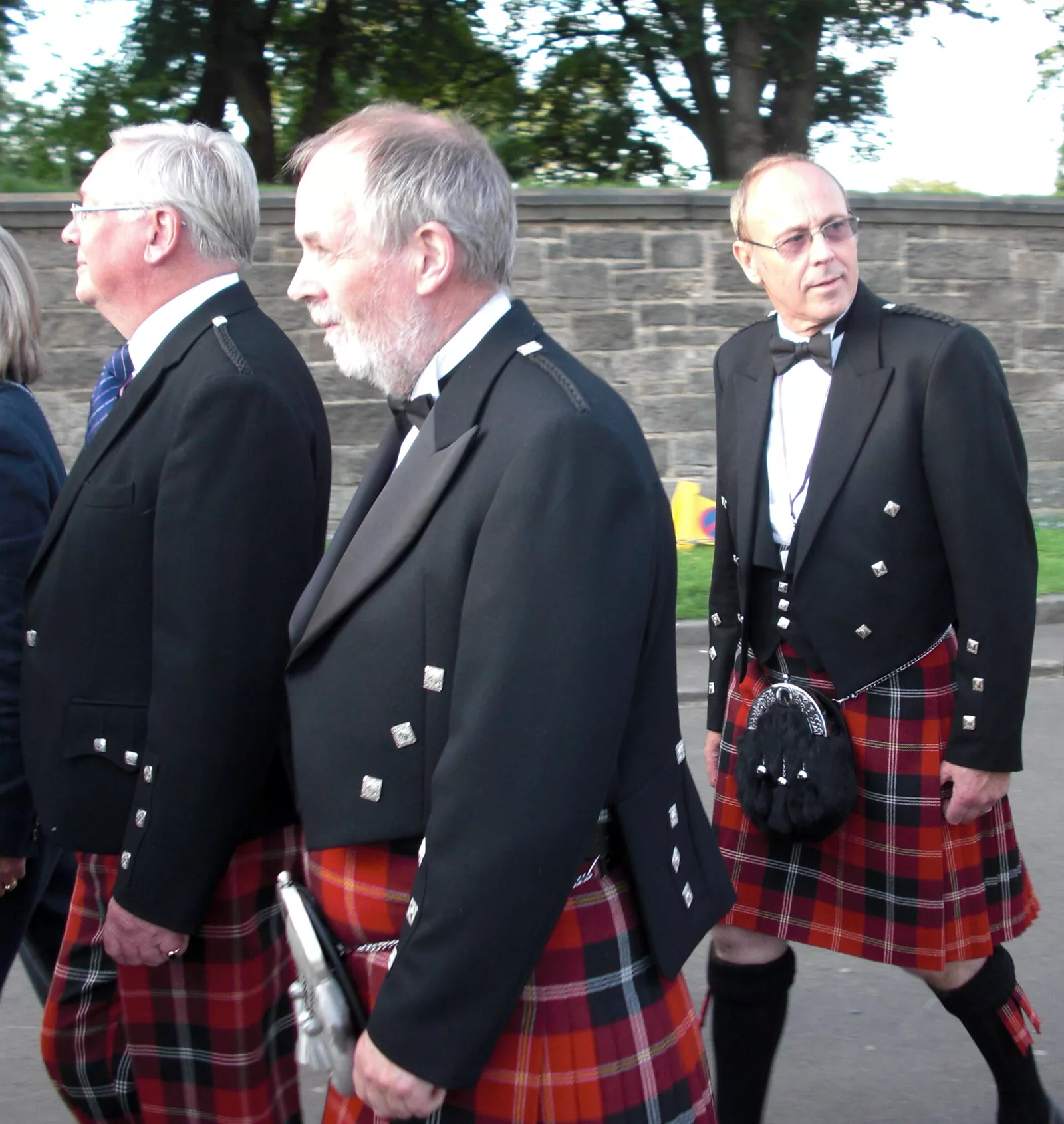

To find a family tartan by surname, search the Scottish Register of Tartans for your name, then check whether the clan behind any result confirms the link. Do not assume that a surname gives you a clan or that a clan gives you one tartan. Each is a separate claim, and some surnames have no tartan at all: the register’s own FAQ says “there is not a tartan for every name, even though that name may be Scottish.”
What counts as a family tartan
A family tartan is a design that a clan, a family or an individual has registered or adopted under a name. It comes in several kinds, and only some of them rest on a surname. The register sorts designs into categories, with clan or family designs beside district, regimental and others. Its FAQ says tartans exist for Scottish clans and their septs, some Lowland families, and geographical districts. So “find my tartan” has more than one honest answer: a name tartan, a district tartan, or a design made for anyone to wear.
What the register can and cannot tell you
The register is run by the National Records of Scotland and records what people submit and what its staff accept. It sorts every design into one of nine categories, and two of them matter for family questions. Clan/Family is defined as “a tartan to be worn by members of a Scottish clan or family as recognised by the Court of the Lord Lyon”. Name is “a tartan named for an individual or family”. The first needs a clan the Lord Lyon recognises. The second needs only a name, so a Name tartan can be registered for a family that is not a clan. The register adds that its staff can reassign a category they think is wrong.
The FAQ answers the question people most want answered with a refusal. Asked which clan a surname belongs to, it says only historic clans recognised by the Court of the Lord Lyon qualify for Clan/Family registration, and it sends family-history questions to ScotlandsPeople. It also states that “there are no laws about which tartan you may wear, just traditions.” So a search result tells you what has been registered under a name. It does not tell you what your family wore.
Method
- Search the register under every spelling. Use the quick search on the home page. The FAQ advises trying alternative spellings if a name returns nothing. Spelling in Scottish records is unstable. ScotlandsPeople lists transcription errors, phonetic spelling by clerks and informants, and the anglicising of Gaelic names, with the example of MacIan becoming Johnston. The National Records of Scotland counts McDonald and MacDonald as different surnames in its annual list, so a tartan filed under one spelling may not appear under the other.
- Read the record, not only the title. Look at the category, the date, the designer if one is named, and the description. A date of 1800 or 1842 in the register is the date the design is first recorded, not a date a family chose it. Threadcounts sit behind a login: the register says you need an account to request threadcount information.
- Check the clan, not only the name. If a clan shares your surname, such as Buchanan, Mackenzie or Wallace, its page on this site lists its tartans and the sources behind each. A matching name is a lead. It does not prove descent.
- Treat sept lists as leads. See the next section.
- Ask the clan society or the chief. The Standing Council of Scottish Chiefs says a tartan that uses a clan’s name needs the chief’s approval, and that wearing a clan tartan signals allegiance to that chief. Societies know which surnames they welcome and which tartans the chief recognises.
- Trace the family, if the question is ancestry. ScotlandsPeople, run by the National Records of Scotland with the Court of the Lord Lyon, advises working backwards from a person whose details you know. Statutory registers of births, deaths and marriages start on 1 January 1855. Before that you rely on old parish registers, which are incomplete and often give little beyond an index entry. The index searches are free and images are pay-per-view.
When your surname has no tartan
Work down the same short list the register gives. If no tartan carries the name, its FAQ says to look for a district tartan connected to the area where your ancestors lived, and adds that some tartans were designed for anyone to wear. A genealogy magazine, Family Tree Magazine, says almost any connection to a place will do for a district tartan, such as where an ancestor was born, married or did business. The same article quotes the researcher Keith Lumsden that only about 20% of Scottish surnames have a clan or family connection, a figure given at second hand and not checked here. It also names the regimental Black Watch as a tartan the magazine calls “considered universal”, which is that magazine’s description, not a rule the register states. The choice remains a tradition: the register says there are no laws about which tartan you may wear.
What a sept list is worth
The word sept has no single meaning. The Clan Buchanan Society quotes Cosmo Innes for families “wholly descended from a branch of the founder or Chief of a clan”, which is the cadet-branch sense, and also lists affiliated families, meaning a different surname that pledges allegiance to another chief. Both appear in the same society’s material, so a sept list can mix descendants, dependants and neighbours without saying which is which.
Sept lists come late. The Council of Scottish Clans and Associations (COSCA) credits a 1896 book by Frank Adam with first linking “septs and dependents” to clans, and George Eyre-Todd with extending the framework in 1923. Clan societies and tartan makers drew up lists in the 19th century that tied as many surnames as possible to a clan. Sir Thomas Innes of Learney, Lord Lyon from 1945 to 1969, is quoted in a Clan Carruthers Society article, at second hand, calling septs “a rather wonderful effort of imagination” and warning of “sept-snatching”. The same article quotes Sir Crispin Agnew of Lochnaw that sept lists “have no official authority” and that belonging to a clan is “a matter for the determination of the chief”. Clan Carruthers, which rejects sept status for its own name, has an interest in that argument, so read it as one clan’s position.
Practice varies between societies. COSCA reviewed over 175 society websites covering more than 150 surnames in April 2023. Of 102 that list surnames other than spelling variants, 61 use “sept”, 41 use another term such as “associated families” or “allied and dependent families”, and 23 use both. Over 40 societies accept members whatever their surname. Clan Donald USA speaks of “Families of Clan Donald”, and the Clan MacPherson Association prefers “Cousins” or “Associated Families”. The practical result: a name on a sept list gives you a reason to write to the society. It does not give you an entitlement or a proven link.
Three worked examples
These use records already researched for this site.
Buchanan. The clan society names cadet branches including Leny, Arnprior, Spittal and Auchmar, and lists further surnames as affiliated. On this site only one of those, MacAslan, rates as probable. Others, such as Watson and Gibson, rate uncertain because the only support is the society’s own list. The register treats Buchanan - 1850 as the clan tartan, a Wilsons of Bannockburn design that W. and A. Smith printed in 1850, and records that the chief authorised it in 2022. In the same year the chief also recognised the different 1842 sett from the Vestiarium Scoticum. Two setts therefore carry the clan’s recognition, and the society says it denies any link to many other tartans sold under the name.
Mackenzie. The register dates Mackenzie to 1778 as the regimental tartan of the Seaforth Highlanders, raised that year by the Earl of Seaforth. It quotes W. and A. Smith (1850) that regiments “now wear the Tartan common to the MacLeods and the MacKenzies” (see Clan MacLeod for the other clan in that sentence). A search for “mackenzie” returns twelve entries, including dress and hunting versions, one from the Vestiarium Scoticum and a 2013 fashion tartan. A surname search here gives a list, and the clan society and chief are the way to choose from it.
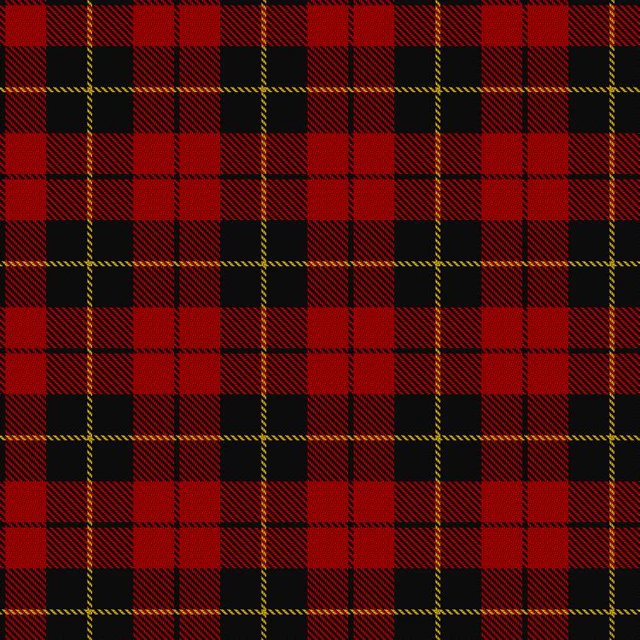
Wallace. The register records Wallace (SRT 1208) as a Clan/Family tartan dated 1800. A separate Wallace Dress entry, attributed to the Sobieski Stuarts and dated 1842, is a black and white design also known as Lendrum or Black and White MacFarlane, so the name was attached to unrelated patterns. The oldest known Scottish tartan fragment, from Glen Affric, was dated to 1500 to 1655 and Sir William Wallace died in 1305. No tartan can be tied to him, and the family’s descent from him rests on its own account.
Why the dates matter
The 1842 Vestiarium Scoticum, published by John Sobieski Stuart, claimed to reproduce an earlier manuscript. A Royal Collection Trust catalogue record states that the claimed 1721 transcript was treated with chemicals to look older than it was, and records Walter Scott’s finding of no evidence for clan-specific tartan in the Highlands. Even so, the register and several clans still record its setts, and the Buchanan chief recognised one in 2022. A recognised tartan can therefore be a Victorian design that a chief later adopted. The register’s date field keeps that visible.
Names were also attached by manufacturers. The Wilsons of Bannockburn firm kept pattern books, and the 1819 key pattern book was reconstructed and published in 1985, with notes on how setts were named. A sett’s name in a pattern book was a trade label before it was a family claim.
How reliable is a link?
This site rates each association on a three-step scale, and the ladder works for your own research too.
| Level | What it looks like | Example |
|---|---|---|
| Verified | A registry, archive or the clan’s own official record states the link directly | A chief’s authorisation recorded in the register |
| Probable | Reputable sources agree there is an association but do not document it | A cadet name on a society list with a second source |
| Uncertain | Tradition, a single weak source, or sources that disagree | A surname that appears only on a sept list |
Common misconceptions
- “Everyone with a Scottish name has a clan tartan.” The register’s FAQ says there is not a tartan for every name, even a Scottish one.
- “My surname is on a sept list, so I belong to the clan.” Sept lists carry no official authority, as the section above sets out. Membership is for the chief and the society to decide.
- “A tartan with my name is my family’s ancestral pattern.” The name may be a trade label or a Victorian design, as the examples show. Check the date and category in the register record.
- “Wearing the wrong tartan breaks a rule.” There are no laws about it. Asking a clan’s chief matters when a tartan is used under the clan’s name, and the Standing Council of Scottish Chiefs treats wearing it as a sign of allegiance.
Questions people ask
How do I find a tartan by surname? Enter the surname in the Scottish Register of Tartans quick search, try alternative spellings if nothing returns, then read each record’s category and date. Contact the clan society if a clan shares the name.
What is my tartan? It depends on which link you can document. A surname may have a Name or Clan/Family tartan in the register, a place your family comes from may have a district tartan, and the register adds that some tartans are designed for anyone to wear. Start with the surname search above and read each record’s category.
Is there a tartan for every surname? No. The register states that there is not a tartan for every name, even though that name may be Scottish.
Can I wear a tartan that is not my family’s? Yes. The register says there are no laws about which tartan you may wear, just traditions. It suggests a district tartan, or one made for anyone, when no name tartan fits. For the etiquette around clan tartans, see who can wear which tartan.
What is the difference between a clan tartan and a family tartan? In the register, Clan/Family needs a clan the Lord Lyon recognises, while a Name tartan only needs a family or individual name. Both are described above.
Can a family have more than one tartan? Yes. Family Tree Magazine notes that hunting tartans use subdued colours and dress tartans brighter ones, so one family or district can have several. The register search for Mackenzie in the worked example above returned dress and hunting versions, and this site’s Mackenzie tartan page lists the sourced ones.
If you find no tartan
Many families have none. The register’s FAQ suggests a district tartan connected to where your ancestors lived, and notes that some tartans were designed for anyone to wear. Choosing for the colours is also reasonable. See who can wear which tartan. If you are choosing the garment as well as the pattern, what is a kilt explains what a kilt is and what the tartan decision does and does not change. Surnames are also common in the national registers, which makes a match more likely and a tartan less informative: the National Records of Scotland lists Smith, Brown, Wilson, Thomson and Campbell as the five most frequent surnames in 2025, and just over 1 in 8 Scottish surnames begin Mac or Mc. Frequency alone does not tie a bearer to a clan.
Tools
The Tartan Finder searches the records on this site by name. It can only show what we have sourced, which is a small share of all Scottish surnames.
Continue learning
Related guides
Sources & further reading
- Scottish Register of Tartans: frequently asked questions
- Tartan: who may wear it (Standing Council of Scottish Chiefs)
- What are septs? (Clan Buchanan Society)
- The romantic myth of a clan sept
- Scottish Register of Tartans: tartan categories
- ScotlandsPeople surnames guide
- ScotlandsPeople family history guide
- A Sept By Any Other Name
- Most common surnames in Scotland, 2025
- Surnames in Scotland over the last 140 years (Occasional Paper No. 9)
- Vestiarium Scoticum (Royal Collection Trust catalogue record)
- The Wilsons of Bannockburn 1819 Key Pattern Book (summary of the 1985 reconstruction)
- Scottish Register of Tartans: Buchanan - 1850
- Scottish Register of Tartans: Buchanan - 1842
- Scottish Register of Tartans: Mackenzie
- Scottish Register of Tartans: search results for "mackenzie"
- Scottish Register of Tartans: Wallace
- Scottish Register of Tartans: Wallace Dress
- Scotland's oldest tartan discovered by Scottish Tartans Authority
- Our chief
- Buchanan Tartans (official guide)
- Names of the Clan Buchanan
- Mad for Plaid: Does My Family Have a Tartan?