Scottish clan
Clan Crawford
A Lowland clan of Lanarkshire, Renfrewshire and Ayrshire named after the barony of Crawford in Lanarkshire. It no longer has a chief: Wikipedia, summarising a standard clan encyclopedia, calls it an armigerous clan, and says the last chief of the Auchinames line moved to Canada in 1904. The family of Craufurdland in Ayrshire is a senior cadet branch that still holds its castle, and the first record of a Crawford tartan is in the Vestiarium Scoticum of 1842.
No photograph is held for this record.
- Region
- Lanarkshire, Renfrewshire, Ayrshire
- Historic seat
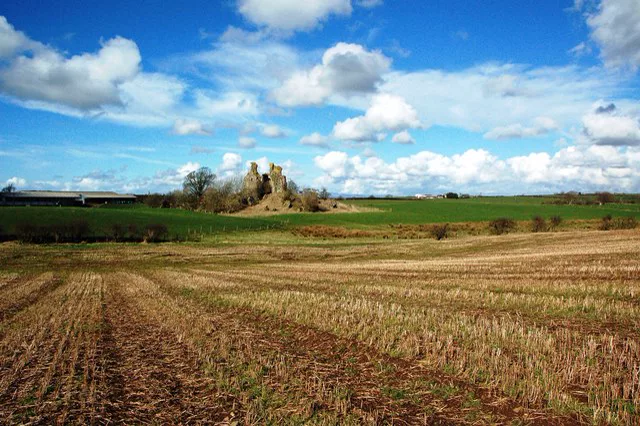
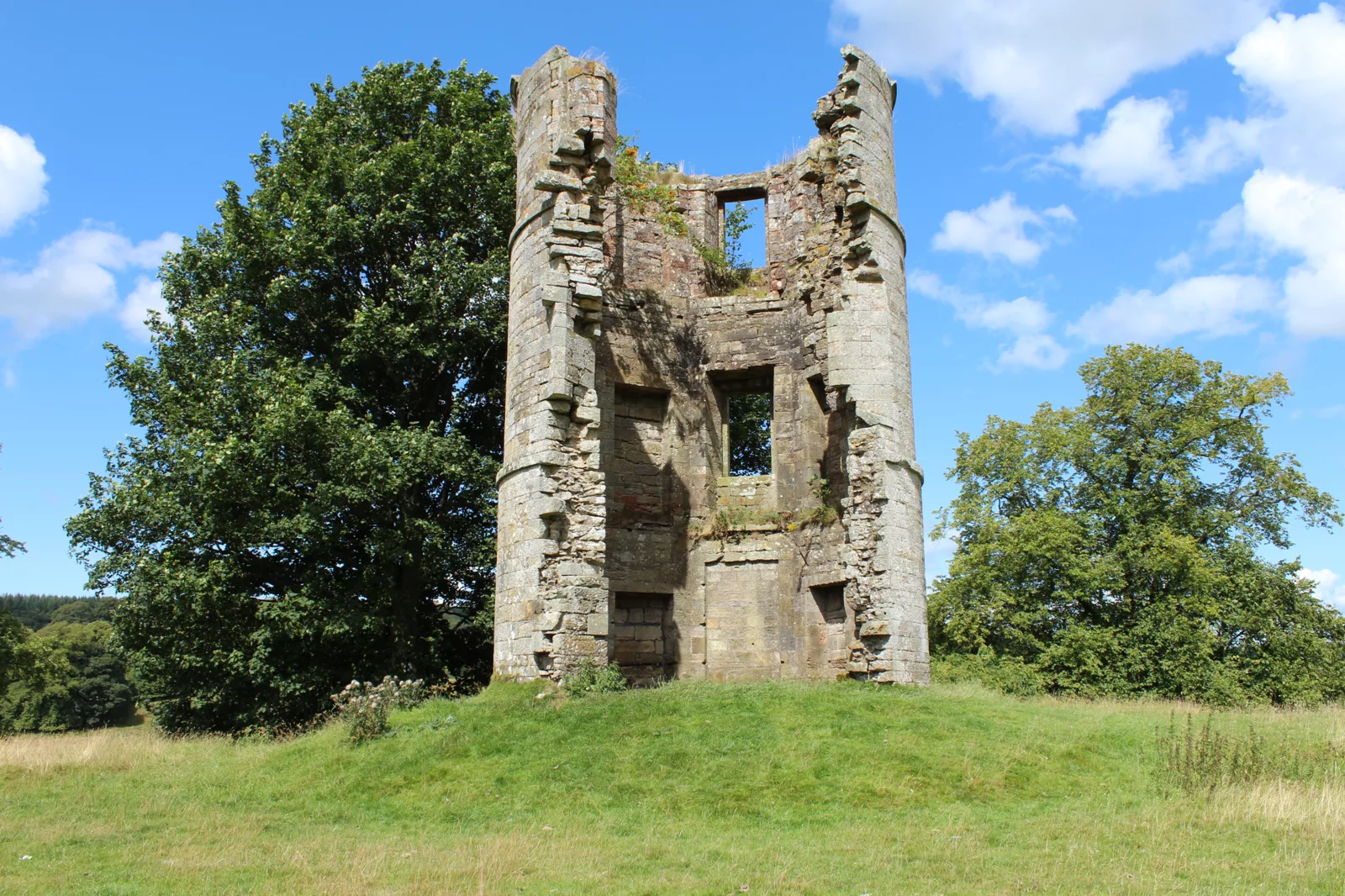
- Auchinames
- Motto
- Tutum te robore reddam
- Linked tartans
- 0
- Linked surnames
- 1
- Evidence level
- D
Overview
Clan Crawford is a Lowland Scottish clan of Lanarkshire, Renfrewshire and Ayrshire. Wikipedia, citing the Collins Scottish Clan & Family Encyclopedia, says the Court of the Lord Lyon recognised it but that it is now armigerous, meaning it has arms but no chief. The motto is "Tutum te robore reddam", which Wikipedia renders "I will give you safety through strength". The crest is a stag's head with a cross crosslet between the antlers, and the plant badge is boxwood.
The historic seat of the chiefly line was Auchinames Castle in Renfrewshire. A senior cadet branch, Craufurd of Craufurdland in Ayrshire, is the family best documented today because its estate website sets out its own history.
Origins
The name comes from the barony of Crawford in Lanarkshire, so the clan is named for a place and not for a founder. The surname page covers how the name is recorded. Wikipedia says the clan is of Scandinavian and Anglo-Saxon origin and that a belief in the early 1700s that it was Norman was mistaken, while admitting that the early personal names of the main Crawford families are Norman. The Craufurdland family history claims descent from a Danish chief named Thorlongus. Neither account is backed by a document in the pages read, so the earliest ancestry is not established.
The first firm figure is Sir Reginald Crawford, sheriff of Ayr. Wikipedia dates his appointment to 1296 and says the chiefly line of Auchinames and the Craufurdland line both come from his family. The Craufurdland history says he was made heritable sheriff by William the Lion, which would be more than eighty years earlier. The two accounts cannot both be right about the start of the office, and the pages read do not cite the records.
Development
Wikipedia lists the clan's lairds in the usual wars of the period: a Craufurdland laird killed at Flodden in 1513, an Auchinames laird killed at Pinkie in 1547, and Thomas Crawford of Jordanhill, who captured Dumbarton Castle from Mary's supporters in 1570. In the eighteenth century John Walkinshaw Crawford of Craufurdland served at Dettingen and Fontenoy and, according to Wikipedia, attended the Jacobite Earl of Kilmarnock at his execution in 1746. Sir Alexander Craufurd of Kilbirnie was made a baronet in 1781, and his son Robert Craufurd commanded the Light Division in the Peninsular War and died at Ciudad Rodrigo in 1812.
The chiefly line ended its landholding in the twentieth century. Wikipedia says Hugh Ronald George Craufurd sold the Auchinames estates and emigrated to Canada in 1904. Wikipedia notes that he left three male heirs, but the pages read do not say whether any of them or their descendants has petitioned the Lord Lyon, so why the chiefship is vacant is not established.
Tartans
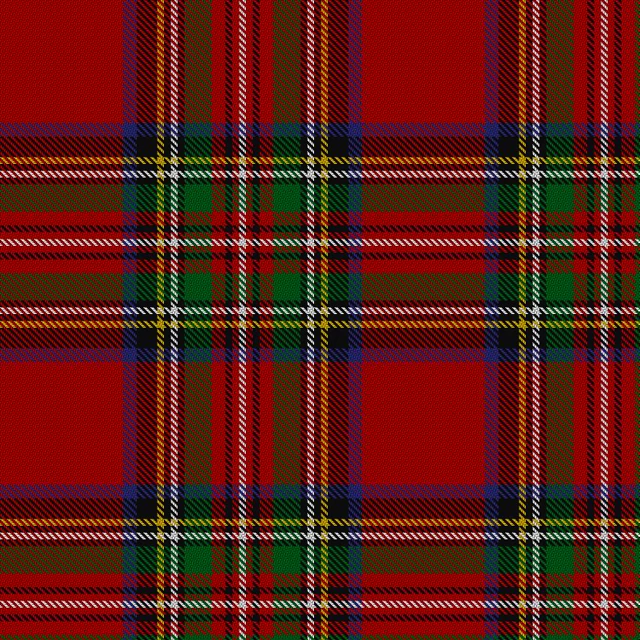
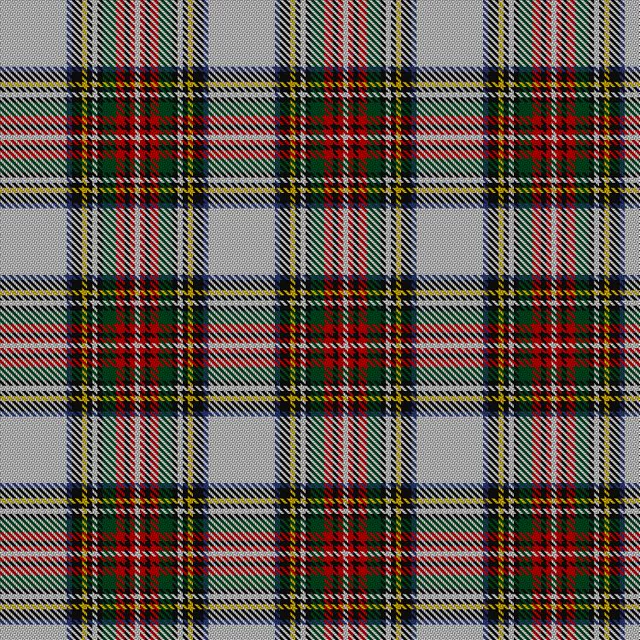
No Crawford tartan is held as a record on this site, because the threadcount is kept behind a login at the Scottish Register of Tartans and no open primary source for it could be read. Wikipedia reports that the first record of a Crawford tartan is in the Vestiarium Scoticum of 1842 and that none existed about 1739. The Vestiarium is a book of that date by the Sobieski Stuarts whose claim to reproduce an older manuscript is disputed, so the pattern is a nineteenth-century clan tartan and says nothing about medieval Crawfords.
Septs
No sept list is recorded for Clan Crawford. Wikipedia lists none, and with no chief there is no one to say which surnames the clan accepts. The Standing Council of Scottish Chiefs says there is no central register of septs. Wikipedia names Clan Wallace, Clan Boyd and Thompson as allied clans, which is a statement about alliances and not about shared surnames. Names such as Craufurd and Crawfurd are spellings of the same surname, not septs.
Clan Armstrong, a Border clan whose last chief was hanged about 1610 according to its association, is another clan on this site with no chief to settle its septs.
Check before repeating
Misconceptions
A common assumption is that every Crawford belongs to one clan with one chief. Crawford is a place name, and Wikipedia's surname article shows the name arising in Lanarkshire, Dorset and Lancashire, so bearers need not be related. A second is that the clan has a living chief; the sources read say it does not. A third is that the tartan is ancient. The earliest record Wikipedia cites is 1842.
Who can wear
The Standing Council of Scottish Chiefs says there are no strict rules on who may wear a tartan and that wearing a clan tartan signals allegiance to the chief. Clan Crawford has no chief to signal allegiance to, so a Crawford wearing the tartan is expressing family or clan identity and not a link to a chief.
Not established
What the record does not show
The pages read do not show the earliest ancestry of the family, the date Reginald Crawford became sheriff of Ayr, or which of the two accounts is right. The Wallace kinship is the family's and Wikipedia's account (see the surname page) and was not checked against a primary record. The year and place of the last chief's death are given differently by different sources, and the Lord Lyon's register was not seen, so whether the chiefship is dormant or merely unclaimed is not established. The Crawford threadcount, its designer and its register entry were not readable. Whether the Craufurdland family has any standing as representative of the clan is not stated in the sources read.
Surnames and septs
The Crawford surname page is at /surnames/crawford/. The link to the clan is rated probable. The clan bears the name and its main branches lie in the area where the place called Crawford is, but the name is a place name found in several parts of Britain, and with no chief there is no one to define membership. No other surnames are listed here, and a person named Crawford is not shown to descend from Auchinames or Craufurdland.
Historical notes
Wikipedia, summarising the Collins Scottish Clan & Family Encyclopedia, says Clan Crawford was recognised by the Court of the Lord Lyon but is now an armigerous clan because it has no chief. It names the last chief as Hugh Ronald George Craufurd, who sold Auchinames, Crosbie and other estates and moved to Canada in 1904, and says he died in Calgary in 1942.
Evidence level D. Sources: [1]
Wikipedia reports that Sir Reginald Crawford was appointed sheriff of Ayr in 1296, that the chiefly line is reckoned to be Crawford of Auchinames, and that Auchinames received a grant of its lands from Robert the Bruce in 1320. The Craufurdland family's own history gives a different, earlier start for the shrievalty, saying Reginald de Crawford was appointed heritable sheriff of Ayr by William the Lion, who reigned 1165 to 1214.
Wikipedia says an early eighteenth-century belief that the clan was of Norman origin was mistaken and that the clan is of Scandinavian and Anglo-Saxon origin, while noting that the early names of the principal Crawford families are Norman and that some scholars have argued for an Anglo-Danish ancestry. The Craufurdland history traces the family to a Danish chief named Thorlongus, which it presents as the family's account.
The Craufurdland family history says the first laird, John, lived in the reign of Alexander II (1214 to 1249), that a charter of Robert III is dated 1391, and that the family followed James IV to Flodden in 1513, where John of Craufurdland died. Wikipedia likewise records a Craufurdland laird killed at Flodden and a laird of Auchinames killed at Pinkie in 1547.
Wikipedia says the first record of a Crawford tartan is the 'Crawfovrd' in the Vestiarium Scoticum of 1842, the book by the Sobieski Stuarts that claimed to reproduce an ancient manuscript of clan tartans, and that there was certainly no Crawford tartan about 1739. It cites the Scottish Tartans World Register for this. The register was not readable for this site, so the threadcount is not recorded here.
Evidence level D. Sources: [1]
Surnames linked to this clan
A surname's link to a clan is a claim about history, not a statement about any person's ancestry.
- Crawford
- Probable
- Supported by a credible source, not independently confirmed.
Fields missing from this record
Lowlands and Borders
Other clans recorded in the same area
Chosen only because their records name regions in the same part of Scotland. It is not a claim of kinship or alliance.
No photograph is held for this record. Shown: register swatches of its linked tartans.